
Why Good Communication, Audio & Lighting Matter at Spartan Race Monterey
Spartan Race is built on endurance, grit, obstacles, and terrain. Behind the race-day energy, strong production planning is what helps move athletes, spectators, staff, volunteers, vendors, and crews through a demanding outdoor event safely and efficiently.
Spartan Race Monterey returns to Toro Park in Salinas for the 2026 Monterey Spartan Event Weekend, scheduled for May 30–31, 2026. The venue is known for steep climbs, open fields, prairies, wooded areas, dusty trails, and wide Northern California views. For racers, that means a physical test. For event producers, it means a communication and production challenge spread across a large outdoor footprint.
Outdoor race events are not like indoor venues. There are no fixed walls, no built-in house PA system covering the entire site, no simple backstage hallway, and no single room where everyone can hear the same announcement. At a race like Spartan, the production plan has to account for distance, terrain, crowd movement, weather, staging areas, start waves, finish-line energy, vendor areas, parking, medical access, and staff coordination.
That is where communication, audio, and lighting become critical.
Mindwarp production note: For large outdoor events, audio and lighting are not just about making the event look exciting. They support announcements, crowd direction, crew coordination, sponsor visibility, emergency response, and the overall guest experience.
About This Year’s Spartan Race at Toro Park
The 2026 Monterey Spartan Event Weekend takes place at Toro Park, located at 501 Monterey-Salinas Highway 68 in Salinas, California. The park sits near Monterey and only a few miles from downtown Salinas, making it a recognizable destination for athletes traveling into the region.
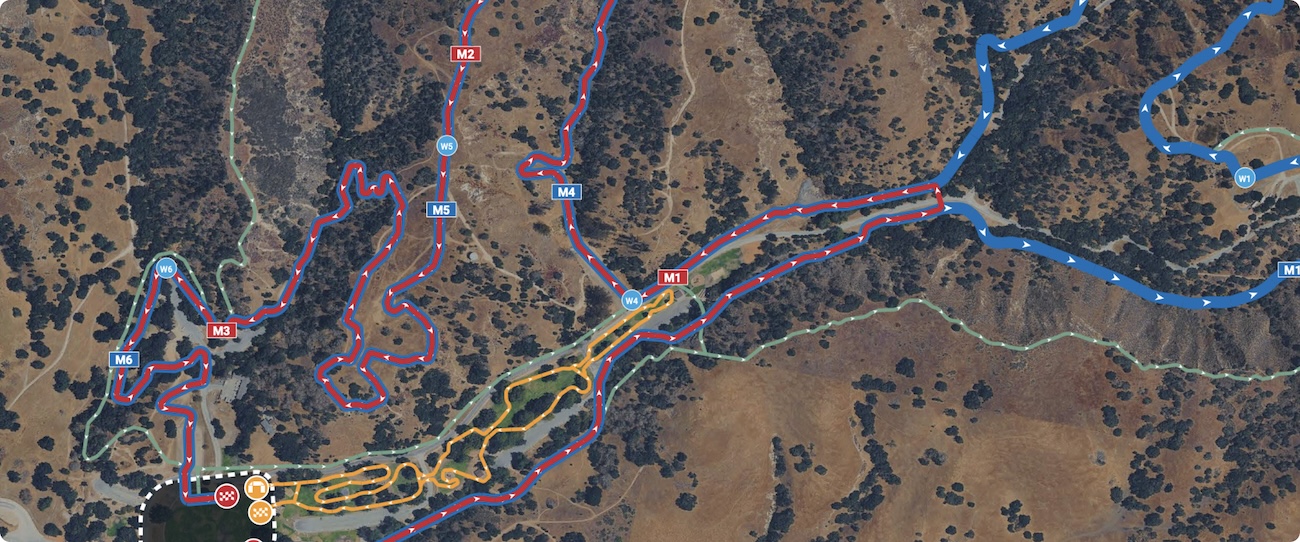
Image: Spartan Race Map 2026 Monterey
Toro Park is a strong fit for Spartan because it offers the kind of terrain racers expect: rolling hills, demanding climbs, trail routes, open ground, wooded areas, dusty peaks, and wide views of Northern California. Spartan’s Monterey event includes obstacle course race options such as Sprint 5K and Super 10K, with trail race options also listed for the weekend.
For participants, the appeal is the course. For spectators and event staff, the experience depends on whether the event site is easy to understand, hear, navigate, and operate.
Why Communication Is the Backbone of Outdoor Race Production
At a large race site, communication has to work across multiple groups at the same time. Racers need clear instructions. Spectators need to know where to go. Volunteers need updates. Security and medical teams need reliable coordination. Production teams need a way to manage timing, announcements, music, power, staging, and issue response.
Good communication planning helps support:
- Start-wave timing and racer staging
- Finish-line coordination
- Volunteer and staff direction
- Parking and shuttle information
- Vendor and sponsor zone coordination
- Medical and safety response
- Lost participant or family member procedures
- Weather or schedule updates
- Load-in, event operation, and load-out crew coordination
When communication is weak, small problems become larger problems. A missed radio call, unclear announcement, or poorly placed speaker can create confusion in a crowd. On a race site with hills, trails, dust, and distance, production communication has to be planned before the event opens.

Photo: Monterey Spartan Event Weekend
Audio Is More Than Music at the Finish Line
Audio is one of the most important production elements at Spartan Race. It sets the energy, drives the start-line experience, supports announcers, and helps guide people through key areas of the event site.
At a Spartan-style outdoor race, audio may be needed for:
- Start-line announcements
- Finish-line music and emcee support
- Racer instructions and safety messaging
- Awards and recognition moments
- Sponsor activations
- Vendor areas
- Festival zones
- Emergency or weather-related announcements
The challenge is coverage. Outdoor sound does not behave the same way it does indoors. Wind, terrain, crowd noise, generator placement, elevation changes, and speaker direction all affect whether people can actually hear the message.
A good audio plan should consider speaker placement, volume control, cable paths, wireless microphone range, backup microphones, power availability, weather protection, and whether different areas need separate audio zones. The goal is not simply to make the site louder. The goal is to make the message intelligible where it matters.
Production reality: If racers cannot hear start-line instructions, spectators cannot hear directions, or crews cannot hear operational calls, the problem is not volume alone. It is audio design, placement, and communication planning.
Lighting Supports Safety, Visibility, and Event Identity
Spartan Race is primarily a daytime outdoor event, but lighting can still matter. Load-in may begin early. Vendors, production crews, signage areas, parking zones, backstage spaces, generators, command posts, medical areas, and finish-line infrastructure may need visibility before or after peak daylight hours.
Lighting can support:
- Early morning crew setup
- Volunteer check-in areas
- Registration or packet pickup zones
- Medical and command areas
- Finish-line and festival presentation
- Sponsor and vendor visibility
- Pathways, ramps, and temporary work areas
- Load-out after the public-facing event ends
Lighting is also part of branding. A finish line with intentional lighting, banners, truss, and audio feels different from a basic pop-up zone. For race organizers and sponsors, production design helps create the visual environment that participants remember and share in photos.
For crews, lighting is also practical. Load-out often continues after the most exciting part of the day is over. Cases still need to be packed, cable needs to be pulled, tents may need to be cleared, and equipment needs to be loaded safely. Proper work light can reduce confusion and help crews move through the site more efficiently.
Why Outdoor Race Sites Need a Real Production Plan
Toro Park’s size and terrain are part of what make the race exciting. Those same features make production planning more demanding. A sprawling outdoor venue requires more than a speaker, a microphone, and a pop-up tent.
Outdoor event production should account for:
- Distance between operational zones
- Hills, trees, dust, and wind
- Generator placement and power distribution
- Cable routing and trip-hazard control
- Radio communication range
- Public announcement coverage
- Backup equipment and replacement plans
- Weather protection for gear
- Load-in and load-out timing
- Emergency access routes
When those details are planned early, the event runs cleaner. Crews know where to go. Announcements are easier to hear. Racers understand what is happening. Spectators can move through the site with less confusion. Production managers can solve issues faster because the communication structure is already in place.
Communication Tools That Matter on Race Day
For a large race event, communication should be layered. One method is rarely enough.
Crew-to-Crew Communication
Radios help production, operations, security, parking, medical, volunteer leads, and site managers communicate across the event footprint.
Public Announcements
PA systems support start waves, finish-line energy, safety updates, sponsor messages, awards, and crowd movement.
Visual Direction
Clear signs help racers and spectators find registration, gear check, restrooms, medical, parking, start corrals, and finish areas.
Visibility and Work Areas
Lighting supports early setup, shaded or low-visibility areas, command zones, sponsor activations, and safe load-out work.
The strongest event plans do not rely on one system. They combine radios, PA, signage, lighting, staffing, call sheets, site maps, and production leadership.
Audio and Lighting Help Shape the Racer Experience
Spartan racers come for the challenge, but the event experience is shaped by production. The sound of the start line, the energy at the finish, the clarity of announcements, the visibility of key areas, and the flow of the festival zone all affect how the day feels.
Good audio and lighting help create:
- A stronger start-line atmosphere
- A more exciting finish-line moment
- Clearer instructions for racers and spectators
- Better sponsor and vendor presentation
- More professional photos and video moments
- A smoother experience for staff and volunteers
For a brand like Spartan, the race is not just a route through hills and obstacles. It is an event environment. Production helps turn the venue into an experience.
Why Skilled Event Labor Matters
Audio, lighting, power, staging, radios, signage, and site logistics do not install themselves. Skilled event labor is what turns a plan into a working race site.
For outdoor events, stagehands and production crews may be responsible for:
- Loading and unloading production trucks
- Setting speaker systems and audio zones
- Running and securing cable
- Building or supporting stage and finish-line elements
- Setting lighting and work lights
- Supporting sponsor and vendor activations
- Assisting with power distribution and generator areas
- Preparing gear for weather and dust exposure
- Striking and loading equipment after the event
For a race environment, crew planning should also consider call times, parking access, food and water, worksite safety, radio channels, department leads, and realistic load-out time. The more spread out the event site, the more important communication becomes between the labor team and production management.
What Race Organizers Should Plan Before Event Day
For an outdoor race like Spartan Monterey, production planning should begin well before load-in. The following items should be advanced before crews arrive:
- Site map with production zones clearly marked
- Audio locations and coverage areas
- Power and generator plan
- Lighting needs for setup, operations, and load-out
- Radio channels and communication protocol
- Emergency announcement procedure
- Weather and dust protection for equipment
- Load-in and load-out schedule
- Labor call times and crew assignments
- Parking and access routes for production vehicles
- Hospitality, water, and break planning for crews
The best production plans are not built around ideal conditions. They are built around what happens when the site is busy, the weather changes, a radio call is missed, a sponsor needs support, or the crowd moves faster than expected.
Spartan Race Monterey Shows Why Production Details Matter
Toro Park gives Spartan Race Monterey the kind of terrain that racers remember: hills, trails, open fields, wooded areas, and wide views near the California coast. That terrain is also exactly why production details matter.
Clear audio helps move racers through the day. Strong communication helps staff and crews respond quickly. Lighting supports visibility, safety, branding, and load-out. Skilled labor helps build, operate, and remove the infrastructure that makes the event possible.
For participants, Spartan is about the challenge. For event organizers, it is also about execution. The stronger the production plan, the stronger the race-day experience. Learn more about the Spartan Race here.
Need Audio, Lighting, or Event Labor for an Outdoor Event?
Mindwarp Entertainment Productions provides event production support, stagehand labor, audio, lighting, and technical crew coordination for live events throughout Santa Cruz, Monterey, Salinas, Carmel, Pacific Grove, San Benito County, and surrounding California markets.
From outdoor races and festivals to corporate events, community gatherings, concerts, and large-scale activations, Mindwarp understands the production details that make an event easier to manage before the public arrives and after the crowd leaves.
Contact Mindwarp Entertainment Productions to plan audio, lighting, communication support, or skilled event labor for your next production.
This article is for general event production planning and promotional commentary only. Event details, schedules, race offerings, pricing, and logistics may change. Always confirm current event information with the official event organizer before making travel, staffing, ticketing, or production decisions.
0 comments